
Learning From the Past: What Happened to Halo's Previous Tabletop Games, and Why Flashpoint Is Different
Anthony SalazarLet’s get our history caps on!
Confession time. I wasn't (really) around for either of Halo's first two attempts at tabletop, not in any real way. I was either too young or just not plugged into this hobby yet when Halo ActionClix hit shelves, and by the time Spartan Games was putting out Fleet Battles and Ground Command, I still had no idea any of this existed. Researching this one genuinely felt like uncovering old family history I never knew about, the kind where you find out your grandpa had a whole other life in the mafia before you were born. Halo has quietly tried this twice before Flashpoint ever existed, and both times it ended in ways that never made it into the mainstream Halo conversation.
Quick note: before we dive in, Halo's touched tabletop in a few other forms over the years too, Halo Wars Risk, the Halo 3 interactive board game, and a handful of other licensed novelties.
This article isn't about those. We're focusing specifically on community based tabletop wargaming, the kind built around army building, competitive play, and ongoing miniature collections, since that's the space Flashpoint actually lives in, and the one worth learning history from.
So let's dig into it!
Halo ActionClix, the First Attempt
The first I'd ever heard of Halo ActionClix was as a kid at Hastings (feel old yet?) and I thought they were cool to collect, and honestly, it's kind of wild that this isn't more well known among Halo fans. WizKids announced the game in early 2007 and launched it that September, timed deliberately to release exactly one week before Halo 3 itself. They even offered an exclusive Target pre-order bonus for Halo 3, so it launched right alongside one of the single biggest game releases of the decade, riding as much hype as any tabletop Halo product ever has.
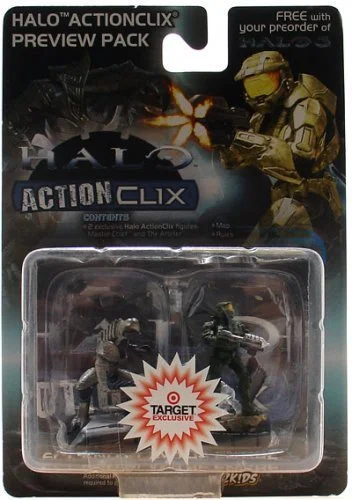
Source: Amazon
ActionClix used WizKids' existing “Clix” system, the same engine behind HeroClix and HorrorClix, where every figure has a rotating dial built right into its base. Take damage in game, you physically click the dial, and the unit's stats shift in real time to reflect it. Dial rotates all the way to a marked color, the unit's dead and has to respawn somewhere on the map. Genuinely clever mechanical solution, and it let the game launch with over 80~ figures right out of the gate, Master Chief, the Arbiter, Warthogs, even a massive battle damaged Scarab that debuted at San Diego Comic Con that summer (and is now a Holy Grail for Halo collectors). I would've eaten this up as a kid if I'd known what it really was, but I was like seven at the time and I liked having the figures on display on my Xbox 360 and TV set.
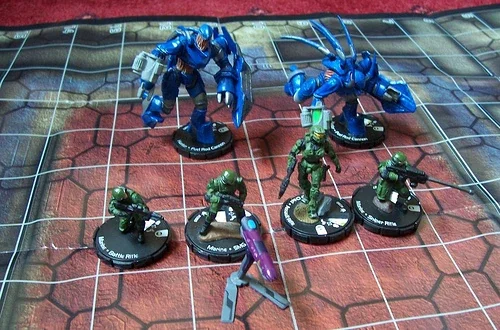
Source: Halo Alpha
Here's the issue though... ActionClix was sold as a Collectible Miniatures Game, meaning figures shipped in randomized booster packs instead of planned army boxes. You didn't choose what you got, you bought blind and hoped, much like a modern day Labubu. That worked fine for trading card games, and it worked well enough for HeroClix for years, but it created real friction for anyone who actually wanted to build a specific list. You couldn't just decide you wanted three Elites and a Ghost, you had to gamble on boosters and trade with strangers to piece it together. Add in quality control issues on some figures and cards, and a lot of early players felt the whole thing just wasn't as tight as HeroClix had been already.
It didn't last long as you could imagine.
WizKids itself got acquired by the infamous “Topps”, and by November 2008, Topps shut down WizKids' original miniatures production entirely, quietly ending ActionClix along with several sister lines in the process. NECA bought the WizKids intellectual property from Topps in 2009 and briefly revived the Halo Clix line around 2010 tied to Halo Reach, complete with a fresh wave of Noble Team figures (still have my Noble Team set from then). That revival faded almost as fast as the original had, and Halo hasn't had a collectible clix game since.
An entire chapter of Halo tabletop history, gone before there was any real traction or market for it.
Halo Fleet Battles & Halo Ground Command, the Ones I Missed by a Hair
The next real attempt came years later, and this one stings a little more knowing how close I was to actually being around for it. In February 2015 (I was 14 at the time), a UK based tabletop company called “Spartan Games” announced a licensing deal with Microsoft Studios to build proper miniature wargames, set in the Halo universe. Spartan Games wasn't some random newcomer either, they already had a solid reputation thanks to games like “Dystopian Wars” and “Firestorm Armada”, so this felt like a legitimate, well resourced swing at doing Halo tabletop right with an established games company.
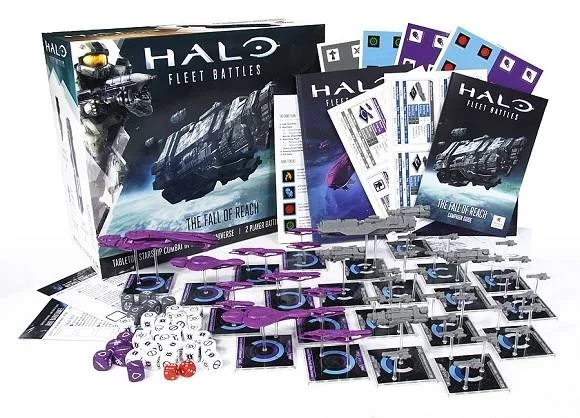
Source: Geek Pride
Halo Fleet Battles came first, launching in July 2015 as a space combat game recreating fleet engagements like the Fall of Reach, built on Spartan's own dice based Firepower Rating system.
A year later, in July 2016, Halo Ground Command followed, a ground combat game set during that same period, using 1 to 100 scale figures to represent infantry, Spartans, and vehicles fighting across Reach's cities. Ground Command shared its core mechanics with Fleet Battles, including the custom Spartan Dice, but added a Reaction System letting players respond to their opponent's actions out of turn, which honestly sounds like a genuinely clever design choice for keeping both sides engaged even outside their own turn.
You can clearly see the idea of having the battles in space, then transitioning to the on the ground chaos, really doing some big picture stuff that I am sure Halo fans at the time would have loved, especially as this was still in the golden age of Reach multiplayer and Xbox Live experiences.
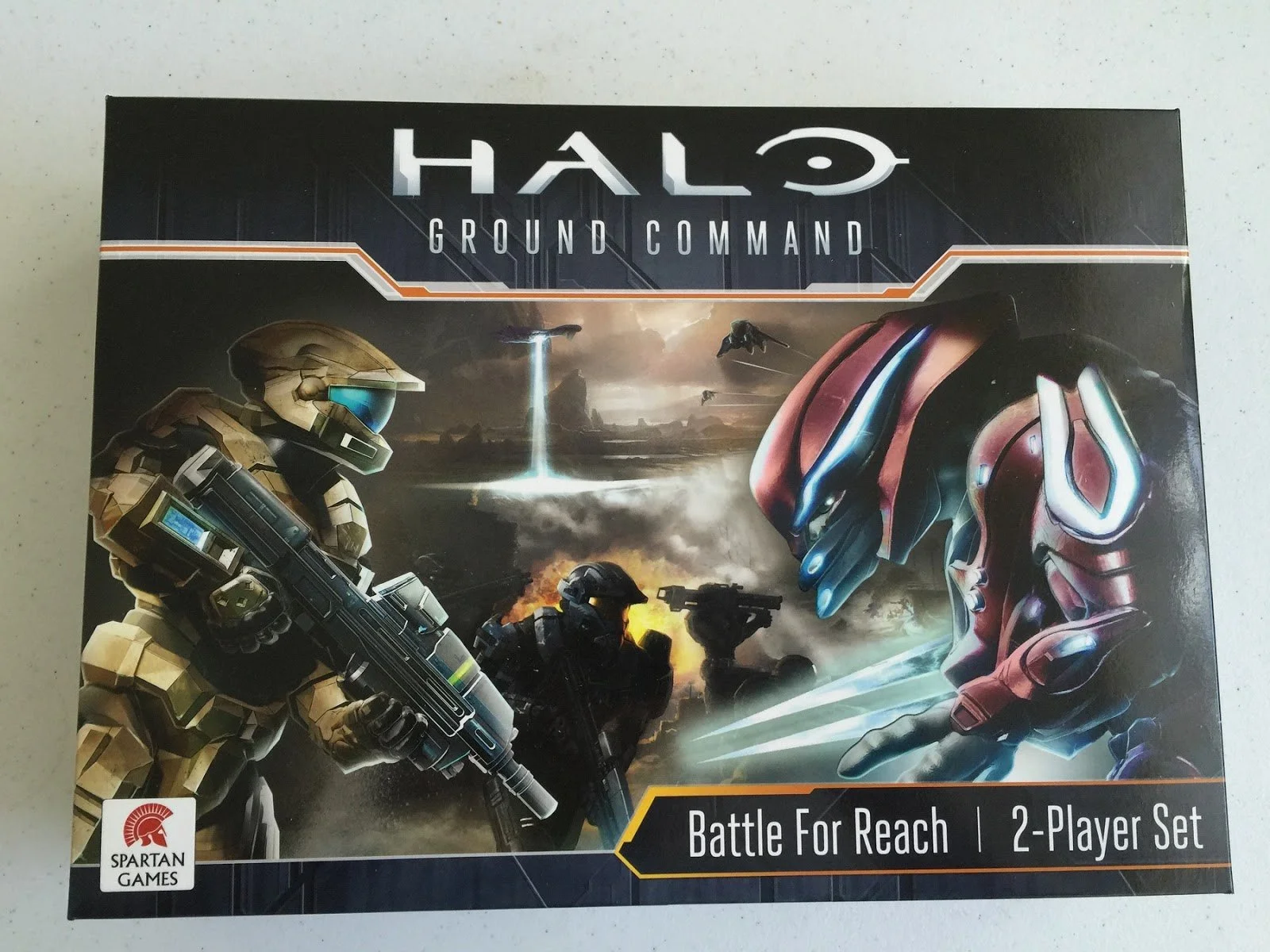
Source: Wrath Ruin and the Red Dawn
Both games looked promising on paper. Army building, terrain rules, and 343 Industries directly involved in approving vehicle and unit designs to keep everything canon accurate. It was a real collaborative effort between two teams that clearly cared, and made an honest attempt to get something going in the tabletop space.
Then, on August 25, 2017, Spartan Games shut down completely, almost overnight.
The company, officially trading as Rebel Publishing Ltd, released a statement citing a prolonged period of challenging trading conditions, real financial losses the previous fiscal year, and the serious ongoing illness of one of the company's directors. At the exact moment they closed, they were mid Kickstarter for a Firestorm Galaxy expansion that had already raised close to fifty thousand pounds before getting abruptly cancelled. Worse, they were still mid fulfillment on an earlier, larger Dystopian Wars Kickstarter, and most backers of both campaigns never saw their pledges or refunds (yikes). Every staff member was let go immediately, and the company's assets, including the Halo license itself, went up for sale with basically no warning to the community that had supported them for years.
Source: Bell of Lost Souls
The fallout was genuinely rough to read about. Longtime fans who'd backed the company across multiple product lines for the better part of a decade were left holding unfulfilled orders with no real path to a refund beyond disputing charges through their own credit card companies. Community postmortems at the time pointed to a mix of causes beyond just the director's health, an overly ambitious string of Kickstarter campaigns, expansion into products with unclear demand, and a broader miniatures market getting more crowded and competitive by the year. Whatever the exact mix or cause, the result was the same either way: two Halo tabletop games just stopped, mid life, with players left with nowhere left to go.
Tabletop Gaming Has a Different Audience Now, and That Changes Everything
Here's something neither ActionClix nor Ground Command ever had a chance to benefit from, and it might be the single biggest advantage working in Flashpoint's favor today. Tabletop gaming just isn't the niche, slightly embarrassing hobby it used to be treated as. Scroll through YouTube Shorts or TikTok for five minutes and you'll run into painting tutorials, battle report highlights, and satisfying unboxing videos racking up views that would've seemed impossible back in 2016. Communities like r/HaloFlashpoint and the broader painting and wargaming corners of Reddit like r/MiniPainting, have turned what used to be a solitary hobby into something genuinely social, where sharing your latest paint job or unit list gets you actual engagement from strangers who love it and are interested.
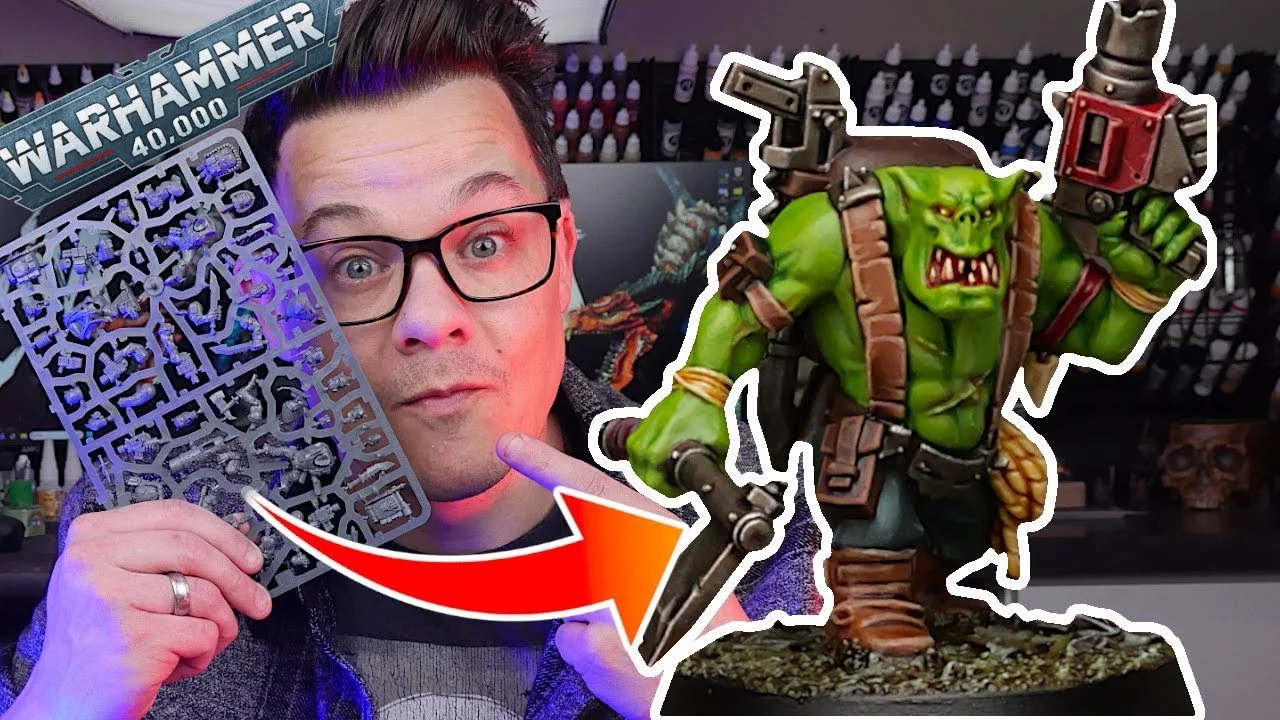
Source: Youtube Channel “Ninjon”
Back when Ground Command launched, if you wanted to find other players, you basically had to already know someone or stumble into a local game store by chance, and deal with the awkwardness of stepping into that world. The exact situation we talked about in our etiquette piece a while back. Now there's a discoverable, algorithm fed on-ramp into this hobby that simply didn't exist a decade ago. Someone scrolling their phone late at night can watch a thirty second painting video, get curious, and be looking up their nearest game store within the hour.
That kind of frictionless discovery is a massive structural advantage that has nothing to do with rules, maeplay quality, or model design, and everything to do with timing and interest. Flashpoint isn't just launching into a healthier business environment, it's launching into a culture that's finally caught up to how fun this hobby actually is, in a period where people participating and playing has become more socially acceptable and welcoming.
Why Flashpoint Is Positioned Differently
So here's the real question this history raises: “What's actually different this time around?”
A few things stand out, and they're worth looking at rather than just assuming things will work out because we want them to.
First, Mantic isn't a company built around Kickstarter dependency the way Spartan Games increasingly became. Mantic has a long standing retail presence, existing product lines that don't depend on the Halo license to keep the lights on, and an established relationship with distributors and local game stores that gives them a much more stable revenue base to fall back on if any single product underperforms. That structural stability matters enormously, because it means Flashpoint isn't the entire company's survival riding on one license, like their Halo predecessors.
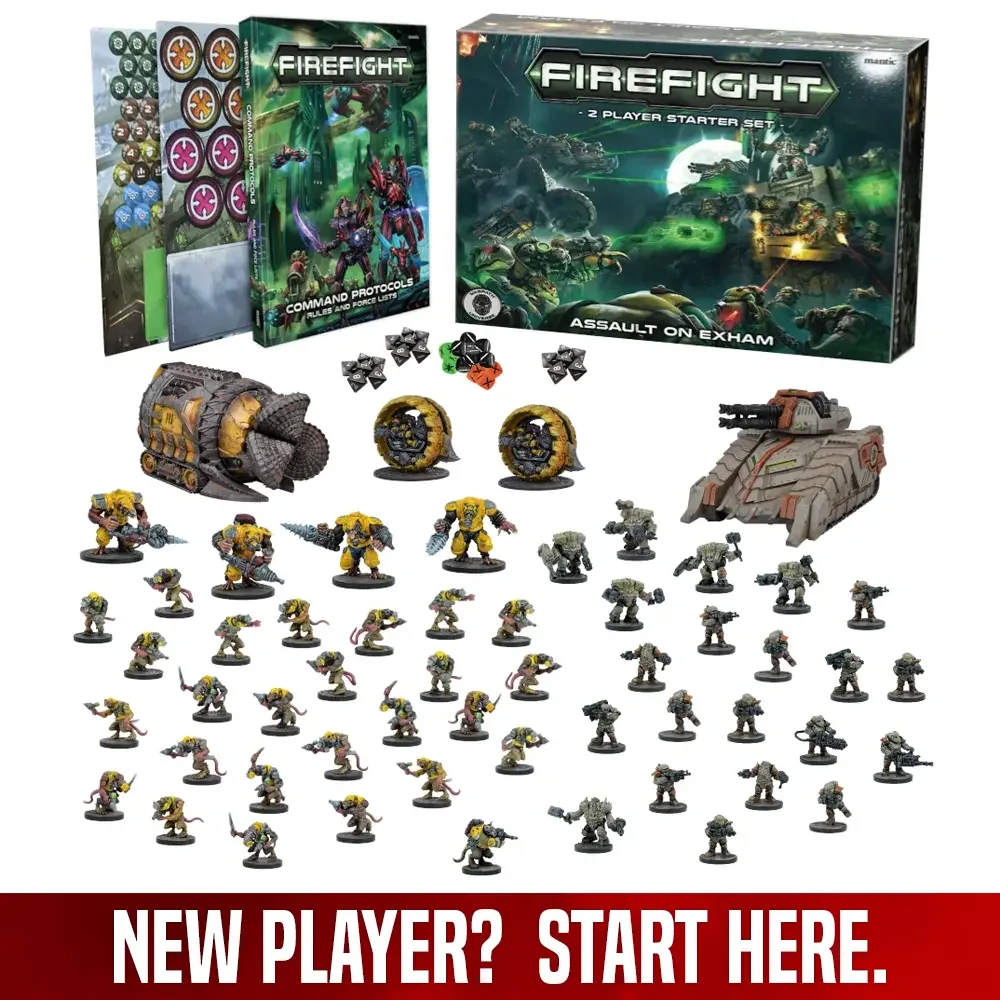
Source: Mantic Games
Second, Flashpoint launched as a standard retail miniatures game from day one, not a collectible blind booster product. You know exactly what you're buying when you pick up a box, which avoids the exact friction that frustrated a lot of ActionClix players who wanted to build specific lists and couldn't. List building is intentional and planned, not gambled on.
Third, and this is honestly the biggest one, the 1.5 rules update we've talked about elsewhere in the Dispatch (now available for viewing on the Flashpoint Index!) shows Mantic is actively consolidating community feedback, errata, and balance changes into a living, evolving rule set rather than letting problems pile up silently. That ongoing support is exactly what was missing in Spartan Games' final year, where a company already under financial strain kept launching new campaigns and expansions instead of stabilizing what it already had out in the world.
And finally, there's simply more transparency this time. Rick Hall (head of Mantic’s North American Sales Division & Pathfinder Program) and the Pathfinders themselves, actively engage with the community, groups like our very own “Black Harriers” get real support and communication going for players on a local level, and the overall tone from Mantic has been one of building a long term community rather than extracting value from a license as fast as possible before something inevitably breaks.
Takeaways for Where We Go From Here
None of this guarantees Flashpoint will avoid the fate of ActionClix or Ground Command. No license is completely safe, and every tabletop company faces real financial pressure in a genuinely crowded market. But understanding this history matters, because it gives us a clearer sense of what to actually watch for as invested players and community organizers. Retail stability over crowdfunding dependency. Planned army building over blind gambling. Visible, ongoing rules support over silent neglect. Real community engagement over one way marketing. And now, for the first time, a cultural moment where tabletop gaming is genuinely mainstream and cool, instead of hidden away in the back room of a hobby shop.
(Partial thanks to people like Henry Cavil, Matthew Mercer, Terry Cruise, and Joe Manganiello for breaking down that barrier in pop culture for us).
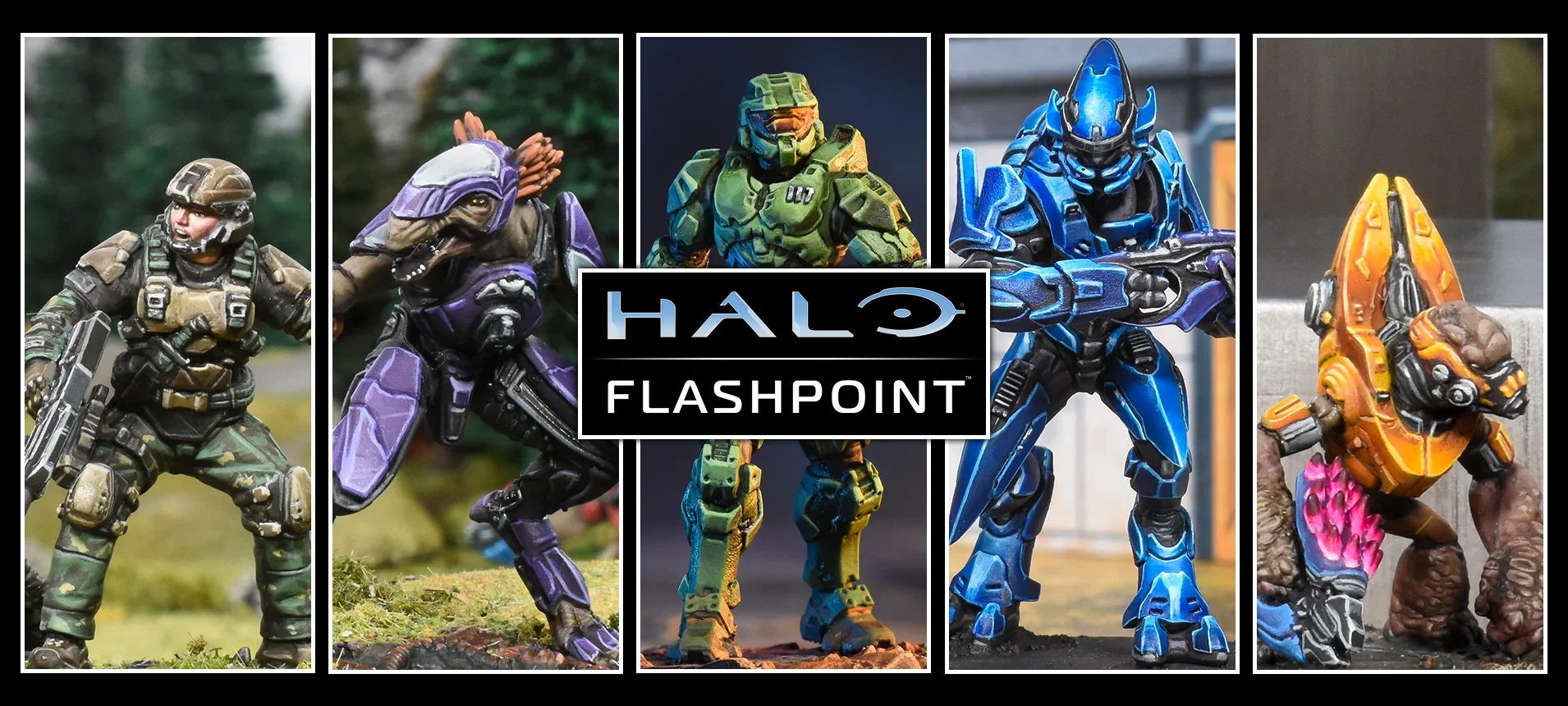
Source: Mantic Games
Halo has tried this twice before and lost both times, not because the universe itself doesn't translate to tabletop, but because of business decisions and circumstances that had nothing to do with the quality of the games themselves. Learning that this whole history existed without me, and honestly without most players our age, made me appreciate what we've got now even more. Flashpoint has a real shot at being the version that sticks around, and understanding exactly what went wrong before is part of how we, as a community, can appreciate what Mantic seems to be doing right this time.
Here's hoping the third time really is the charm.
Quick heads up, we're running a giveaway for email subscribers at the end of the month, full details coming soon. If you haven't subscribed to the Dispatch newsletter yet, now's a good time, you don't want to miss this one.
